Anxiety is treatable — and assessment comes first
Anxiety is not a personality flaw and it is not something you simply have to tolerate. In clinical practice it is treated as a pattern: identifiable triggers, physical arousal, anxious predictions, and coping behaviours that unintentionally keep the pattern alive.
Treatment begins with a structured assessment rather than advice. In a first session I take a careful history — when the difficulty began, how it shows up in your body, what you now avoid, how sleep and concentration are affected, and what has already been tried. Where useful, standardised measures are used so progress can be tracked objectively rather than by impression.
The different faces of anxiety
Generalised anxiety shows up as near-constant worry that moves from topic to topic. Panic presents as sudden surges of physical symptoms — racing heart, breathlessness, a sense of unreality — often followed by fear of the next episode. Social anxiety centres on being judged, and health anxiety on the meaning of bodily sensations.
These require different treatment emphases. That is why a general recommendation to 'relax' rarely works: the maintaining mechanism differs in each case, and effective therapy targets the mechanism, not the label.
What a course of treatment looks like
Sessions are typically weekly at the start. Early work focuses on understanding your specific cycle and reducing physiological arousal through breathing regulation, grounding and sleep structure. Middle sessions test anxious predictions in real situations, at a pace you agree to — this is where most durable change happens.
Later sessions consolidate: reducing safety behaviours, rebuilding avoided activities, and preparing a relapse-prevention plan you keep. Many people also find that skills generalise — the same method used for presentations at work applies to travel, driving or family conflict.
Where anxiety is strongly held in the body, or where a habit such as smoking or nail-biting sits alongside it, clinical hypnotherapy may be offered as an adjunct within the same plan. It is used as a supportive technique inside psychological treatment, never as a stand-alone promise of a cure.
In-person in Lahore, or online across Pakistan
In-person sessions are available in Lahore at Fatima Hope and Psychological Centre, PCSIR Staff Colony, College Road, and at Block Z, DHA Phase 3. Islamabad sessions are arranged by prior appointment.
If you are in Karachi, Faisalabad, Multan, Peshawar, Rawalpindi or overseas, secure online consultations are available and follow the same clinical structure as in-person work.
How to begin
The practical first step is a single assessment appointment. It is not a commitment to long-term therapy — it is a structured conversation that clarifies what is happening and what kind of support, if any, would be appropriate.
You can request an appointment through the booking form on this website, or message on WhatsApp to ask a question first. Everything discussed is confidential within professional and legal limits.
Common questions
- How many sessions does anxiety treatment take?
- It depends on the type and duration of the anxiety and on what else is present. Focused work on a specific anxiety often runs over a shorter course, while longstanding or complex difficulties take longer. A realistic estimate is discussed with you after assessment; individual outcomes vary.
- Do I need medication as well as therapy?
- Not necessarily. Medication is a medical decision made by a psychiatrist or physician. Psychological treatment can be used alone or alongside medication, and where a medical opinion would help, a referral is suggested.
- Is online therapy for anxiety as structured as in-person?
- Yes. Online sessions follow the same assessment, formulation and treatment structure. What matters is a private space, a stable connection and consistent attendance.
Ready to talk it through?
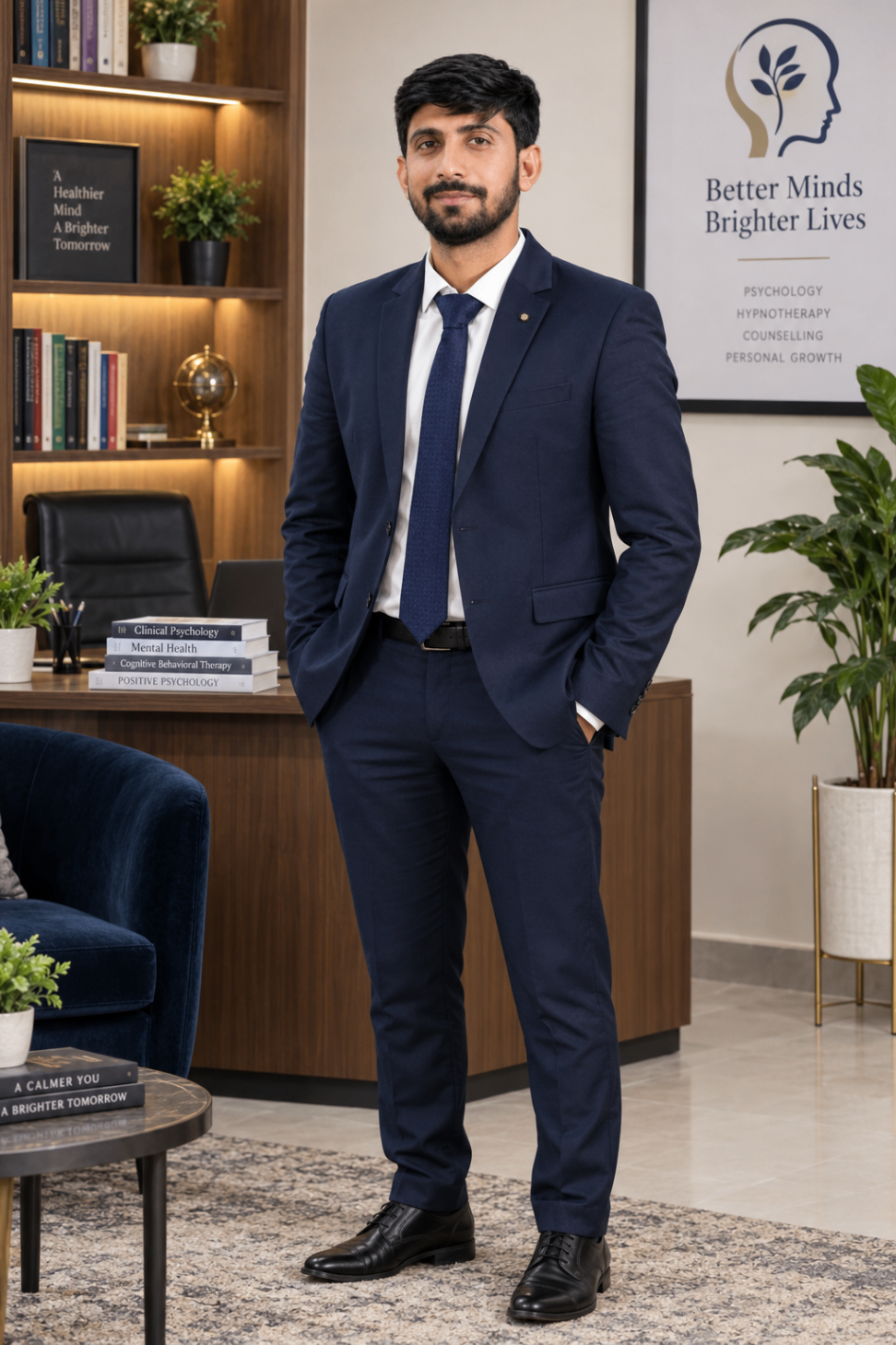
A single assessment appointment with Tayyab Murtaza, Clinical Psychologist & Hypnotherapist, is the clearest way to understand what you are experiencing and what would help. Sessions are available in person in Lahore and securely online across Pakistan and internationally.
About the author
Tayyab Murtaza is a Clinical Psychologist & Hypnotherapist and Founder of Fatima Hope and Psychological Centre, offering assessment, psychological therapy, group therapy and clinical hypnotherapy in Lahore and online.
Read full profile